
Maximize Local Impact, Drive Local Performance.
Why AI Agents Are a Game-Changer for Businesses
Save 20+ hours/week by automating tasks like data entry or content updates.
Cut human errors—AI agents follow rules perfectly.
What Is an AI Agent?
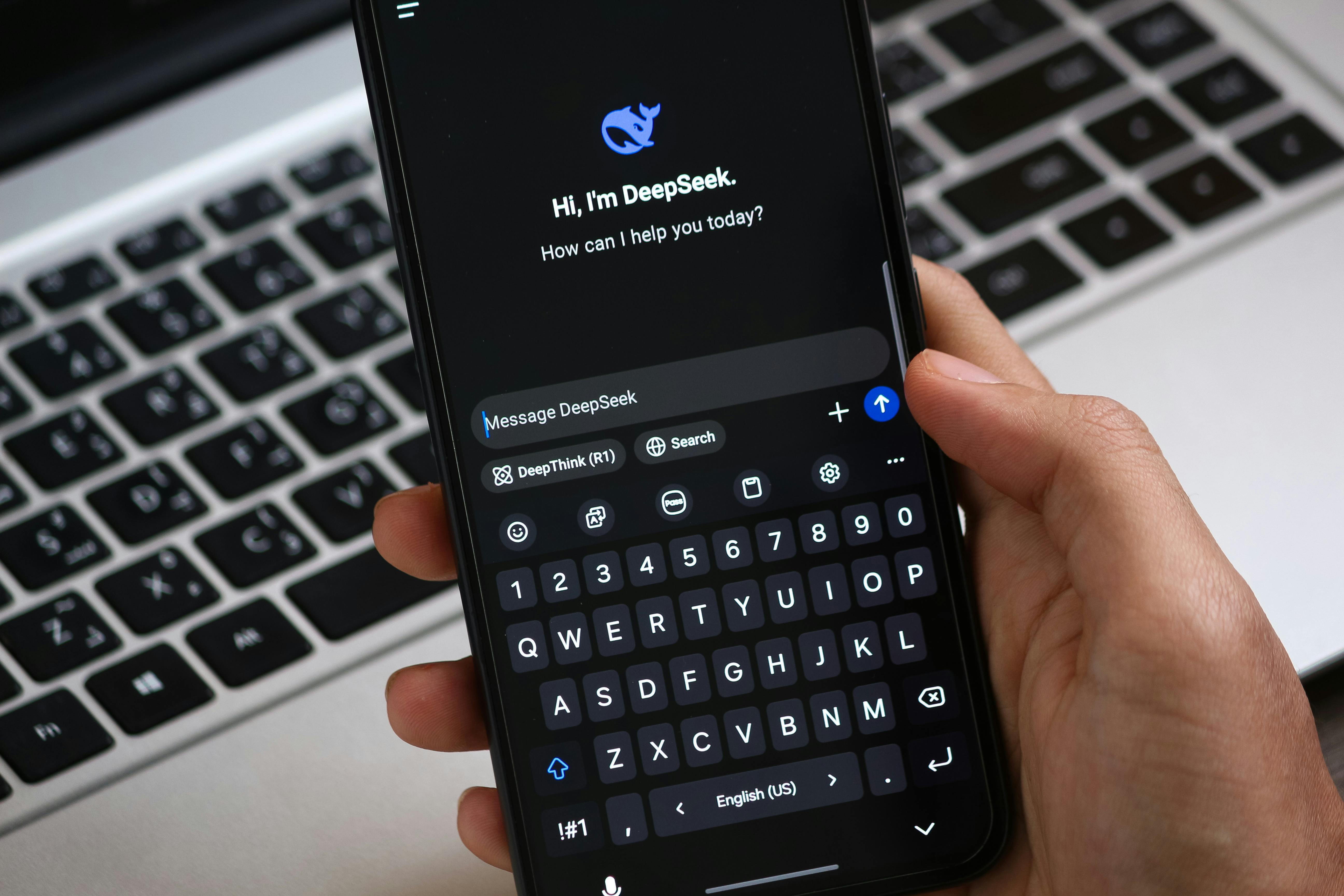
An AI agent (or intelligent agent in AI) is a program that perceives its environment, makes decisions, and takes actions to achieve specific goals—without constant human input.
If you’ve ever asked Siri for the weather or watched Netflix’s eerily accurate recommendations, you’ve interacted with an AI agent. These digital helpers are everywhere. But how do they actually work? Let’s pull back the curtain. Imagine having a 24/7 employee who never sleeps, learns from experience, and handles repetitive tasks flawlessly from answering customer queries to optimizing your website for search engines. That’s the power of an AI Agent. In 2024, businesses using AI agents report 40% faster task completion and 30% cost savings (McKinsey). But what exactly are they, and how can they transform your workflow? Let’s break it down—in plain English.
What Is an AI Agent? The Secret Weapon Automating Your Business Growth -

Karthi
May, 2025
•
8 min read
Think of it like a self-driving car:
Perceives surroundings (sensors, data inputs
Decides when to brake or turn (algorithms).
Acts autonomously (steering, accelerating).
In business, AI agents automate everything from customer service (chatbots) to SEO optimization (like CloseBi’s HyperFly™).
How AI Agents Work: The 4 Key Components
1. Sensors (Input)
Collects data (e.g., user queries, market trends, website analytics).
Example: HyperFly™, our hyperlocal marketing platform, scans Google search trends to find high-traffic keywords for your business.
2. Processor (Decision-Making)
Analyzes data using rules, machine learning, or LLMs (like GPT-4).
Example: An AI agent decides which email subject line boosts open rates.
3. Actuators (Output)
Takes action (e.g., sends responses, updates your website).
Example: HyperFly™ auto-publishes SEO-optimized blog posts for you.
4. Learning Mechanism
Improves over time (learning agent in AI).
Example: The more data HyperFly™ processes, the better it predicts ranking opportunities.
By 2025, 50% of enterprises will use AI agents for customer interactions (Gartner). Early adopters gain a massive competitive edge—like businesses using HyperFly™ to:
The Future: AI Agents Are Getting Smarter
Deploy Your AI Agent with CloseBi: Makes It Easy
No tech skills needed—set up in 5 minutes.
Built for business growth (SEO, content, listings).
Learns and adapts—so you stay ahead of algorithms
Stop wasting time on manual tasks. Let HyperFly™’s AI Agent do the work
Real-World Example:
CloseBi’s HyperFly™ AI Agent automates local SEO, content creation, and listing updates—so a 10-location restaurant chain can rank #1 in every city without hiring an SEO team.

What is Psychographic Segmentation?
8 min read
Jesica koli

May 4, 2025
What is composable architecture
8 min read
Jesica koli
May 4, 2025
Latest Blogs
Want More Footfall at Your Retail Store?
Lorem ipsum dolor sit amet, consectetur adipiscing elit, sed do eiusmod tempor incididunt.

what are the components of a website
8 min read
Jesica koli
May 4, 2025
popular Blogs
what is an ai agent
8 min read
Jesica koli
May 4, 2025
+(91) 0000 0000
closebi@ai.co
Subscribe to get an update :
Subscribe
CloseBi is a product of Hyperready Technology LLP. © 2025 Hyperready Technology LLP. All rights reserved.
CloseBi.AI — Smarter, Search-Led Growth with AI Agents CloseBi helps businesses accelerate organic growth and increase visibility through a search-led strategy powered by intelligent AI agents. From optimizing local search to driving real-time engagement and reputation management, our platform transforms everyday interactions into measurable business outcomes.
What Is Hyerlocal Marketing and How It Works?
karthi
May, 2025
•
8 min read
Here’s the thing: the world of marketing has shifted. Gone are the days when casting a wide net worked best. Today, if you’re a business fighting for attention in a local area, narrowing your focus—and your geography—can deliver far greater impact. That’s where hyperlocal marketing comes in. It’s especially relevant if you’re working with local businesses, multi-location brands, or SMBs wanting to dominate a specific neighbourhood or postcode.
In this blog, I’ll unpack what hyperlocal marketing is, why it matters, how it works (step-by-step), tactics you can apply (especially for your target audience of small & medium business owners), and how you measure success. I’ll pepper in some best practices, pitfalls, and examples too. Let’s break it down.
Put simply, hyperlocal marketing is about targeting potential customers within a very specific geographic area—think neighbourhood, a few blocks, even a single street—rather than a whole city or region.
It leverages mobile searches (especially “near-me” queries), location data, and tailored messaging that speaks directly to people physically close to your business or relevant service area.
Here are some clarifiers:
It is more granular than what most marketers call “local marketing”. For example, local marketing may cover a city or ZIP-code; hyperlocal drills down further to blocks, radius targeting, device-level.
It often combines online and offline tactics—digital geo-targeting, mobile ads, social media radius ads plus in-store promotions or community events.
It’s about relevance at the moment of need: someone nearby searching for a service now, you’re visible, you win.
In short: you’re putting your marketing message in front of the right people, in the right place, at the right time—with much tighter geographic control than usual.
2. Why Hyperlocal Marketing Matters (for your audience)
Since you work with software and marketing services aimed at small and local businesses, this section is highly relevant. Here’s why hyperlocal should be on your radar.
High intent.
When someone searches “plumber near me” or “coffee shop 500 m away”, they often intend to act quickly. That means the proximity = higher conversion potential.
Efficient use of budget.
Because you’re targeting a small radius, your ad spend is focused on a smaller audience that’s more likely to convert—less waste.
Drives foot traffic and local visibility.
For bricks-and-mortar businesses (retail, services, hospitality) this is gold: hyperlocal campaigns can increase walk-in visits or local enquiries.
Personalisation and local relevance build loyalty.
When your messaging reflects neighbourhood-specific references, culture, events, or issues, you connect more meaningfully with the community. That strengthens brand recall and loyalty.
Differentiation in crowded markets.
Often small local businesses compete against bigger players. A targeted hyperlocal strategy helps them stand out by being closest, most relevant, most local.
So for your clients (local or SMBs), implementing hyperlocal marketing is not just optional—it can be a strategic lever to outperform bigger, broader campaigns.
How Hyperlocal Marketing Works: Step-by-Step
Here’s a structured workflow you can map for your clients (or integrate into your SaaS positioning for the local business segment). I’ll give you 6 key phases.
Phase 1: Geo-segmentation & audience definition
Define the physical area you want to target (radius around store, block, postcode)
Identify the audience demographics, behaviours, mobile usage patterns in that micro-area
Use location data, foot-traffic heatmaps, mobile device analytics if available
Phase 2: Channel & technology setup
Make sure your Google Business Profile (formerly Google My Business) is optimised for the location. Local listings must reflect the micro-area.
Set channel targeting: Google Ads with geo-radius targeting, social media ads with location filter (e.g., within X km of store), mobile push notifications to devices near the store, geo-fencing.
Ensure your tracking & attribution are configured so you can tie‐back actions to specific locations and devices.
Phase 3: Craft localised messaging
Use copy, offers and content that reference the immediate area: street name, neighbourhood, local landmarks, local events, time-bound offers for nearby audience
Use mobile-friendly creative: short message, strong call-to-action, location-specific urgency (“Just 2 blocks away”, “Drop in today”, “Offer within 1 km”).
Phase 4: Localised landing/experience
When users click, they should land on a page that reflects them: “We’re your local café in Jumeirah” or “Dubai Marina residents – 20% off”
For physical stores: ensure the store experience, hours, offerings reflect the local audience (maybe adjust hours for nearby business crowd, nearby residential crowd).
Online conversions can also feed physical visits (bookings, pickups).
Phase 5: Monitoring and optimisation
Track metrics at the location/radius level: impressions, clicks, conversions, foot traffic, map direction clicks, mobile calls
Use heatmaps or device location data if you have it to refine radius or zone targeting
Adjust bids, ad creative, time of day targeting (e.g., lunch time for nearby offices, evening for nearby residences)
Phase 6: Local engagement & community reinforcement
Encourage reviews from local customers — this drives social proof in that micro-area.
Use offline tactics: local flyers, neighbourhood events, store signage, local partnerships (with nearby complementary businesses)
Leverage social media locally: local hashtags, community groups, geo-tagging, local influencers.
Specific Example (for your target market)
Since you service small and medium local businesses (and you’ve got SaaS too), here’s how you might pitch hyperlocal marketing to a client (say a local HVAC service firm in Dubai):
Campaign goal: Increase service calls in the Dubai Marina + JBR area by 30 % in next quarter.
Geo-target radius: 5 km around Dubai Marina, targeting mobile device users who have shown “air-conditioning repair near me” or “emergency HVAC Dubai Marina”.
Message: “Same-day AC repair in Dubai Marina – local team lives 5 min away. Call now.”
Landing experience: Mobile-optimized page with “Available now in Dubai Marina: Book Appointment” + map of service team nearby + local customer testimonial.
Offline reinforcement: Door hanger flyers distributed in buildings in Marina, call-out “Live in Dubai Marina? We are your local HVAC team.”
Tracking: Use unique phone number, landing page conversion tracking, map direction clicks, follow-up survey “Where did you find us?”
Budget efficient: Rather than broad “Dubai city-wide AC repair” ads, this narrows to highest-value micro-area.
Outcome: By focusing message + location + mobile behaviour you drive higher conversion and lower wasted spend.
Since you are building multi-layered content ecosystems, you can support this client with location-specific blog posts (“Top 5 Reasons AC Breaks in JBR High-Rises”), service cards (“Emergency HVAC Repair – Dubai Marina”), and local case studies (with metrics) — this ties back into your design-rich templates.
Measurement & KPIs
To show value—and to justify budget—you’ll need to track the right metrics. Here’s what to focus on:
Primary KPIs
Impressions/clicks from within the geo-radius
Click-through rate (CTR) of ads targeted to the zone
Conversion rate (form fill, phone call, booking) from those clicks
Foot traffic or in-store visits (if applicable) triggered by campaign
Map direction clicks or “call business” clicks from mobile
Cost-per-acquisition (CPA) for that hyperlocal zone
Secondary KPIs
Increase in local-search visibility (map ranking, “near me” ranking)
Growth in local reviews and ratings
Repeat visits / local customer retention (if you can track)
Engagement on geo-targeted social posts
Incremental lift vs baseline (compare neighbourhood targeted campaign vs non-targeted).
Baseline & control
Establish a baseline: what current foot traffic, local enquiries, conversions are before the campaign
Use a control zone (another similar neighbourhood) to test incremental lift
Use tools like device-location tracking or geo-conversion modelling if possible.
Attribution
Since many local conversions may happen offline (phone call or store visit), tagging and tracking is critical
Use unique trackable numbers, landing page variants, coupon codes that reference the neighbourhood.
Use store-visit data where you can (especially for retail).
Challenges & How to Mitigate Them
No strategy is without hurdles. Here are challenges you may face—and how to address them.
Challenge: Limited audience size
Working in a very small radius means fewer people — if the target zone is too narrow you risk low volume.
Mitigation: Balance radius size with density of target audience. Expand radius if necessary; use multiple zones.
Challenge: Data accuracy and privacy concerns
Mis-targeting due to inaccurate location data, or audience opt-out of location tracking.
Mitigation: Use reliable location-based ad platforms; ensure you respect privacy regulations; test your radius targeting.
Challenge: Scaling efforts
If you have many locations (multi-store), scaling hyperlocal campaigns manually can become operationally heavy.
Mitigation: Use automation: template-based landing pages, dynamic ad copy that pulls location, scalable campaign structures. Your SaaS story could highlight this.
Challenge: Attribution of offline conversions
Measuring store visits, walk-ins, offline calls can be tricky.
Mitigation: Use unique URLs/call numbers, promos redeemable in-store, store-visit tracking via Google Ads/Analytics, customer surveys.
Challenge: Maintaining relevance
Neighbourhoods evolve, audience behaviours shift, offers can grow stale.
Mitigation: Refresh messaging regularly, micro-segments by time of day, adapt to local community events.
Integration with Your Services & Content Ecosystem
Since you build marketing templates, content hubs and service cards for local businesses, here’s how you can weave hyperlocal into your offering:
Service card template: Headline: “Your [SERVICE] Expert in [NEIGHBOURHOOD]” + outcome-focused description.
Hero slider variant: “Near you in [AREA] → Book in 60 min”.
Blog topic idea: “Why [NEIGHBOURHOOD] home-owners need emergency [SERVICE] after summer heat”.
CTA banner: “Click if you’re within 3 km of our [AREA] depot – same-day support”.
LinkedIn post for thought-leadership (for CEO Sanjiv Cherian): “Why OT security vendors must adopt hyperlocal strategies to serve smart-city clusters in GCC – one tower, one block at a time.”
GTM/Apollo tracking code snippet: Add UTM parameters like
utm_location=[area]andutm_radius=5kmso you can segment by neighbourhood.Newsletter template: “Exclusive offer for [AREA] residents – 15% off this month”.
By embedding hyperlocal messaging across your ecosystem, you make the offering more tailored, more actionable, more valuable to SMBs looking for nearby clients.
9. Quick checklist for implementing today
Here’s a playable checklist you can hand to a client:
Define geographic zone(s) (radius, postal codes, neighbourhoods)
Audit current presence: Google Business Profile, map listings, reviews
Set up geo-targeting in ad platforms (search + display + social)
Create location-specific landing page(s) with relevant messaging
Design mobile-first creative (ad copy, visuals) referencing local area
Launch campaign; track via unique URLs/call numbers
Monitor KPIs: clicks, conversions, foot traffic, CPA
Optimise: adjust radius size, copy, offers, time-of-day targeting
Engage locally: encourage reviews, partner with local businesses, local event tie-ins
Report: show incremental lift vs baseline, show ROI.
Conclusion
What this really means is: for local businesses, especially those you serve, hyperlocal marketing isn’t a “nice-to-have.” It can be a major differentiator. When done with precision—defining the right zone, crafting the right message, using location-based targeting—you unlock higher intent leads, better conversion rates, and more efficient spend.
From your standpoint as a service provider/software marketer targeting SMBs, you can position hyperlocal marketing as a core pillar of your value proposition: “We not only build your website and content ecosystem, but we activate your business right in the neighbourhood you need to dominate.” That angle speaks directly to business owners, not just high-level executives—they see local action, local ROI.
What is Psychographic Segmentation?
8 min read
Jesica koli
May 4, 2025
What is composable architecture
8 min read
Jesica koli
May 4, 2025
Latest Blogs
Want More Footfall at Your Retail Store?
Lorem ipsum dolor sit amet, consectetur adipiscing elit, sed do eiusmod tempor incididunt.
what is an ai agent
8 min read
Jesica koli
May 4, 2025
what are the components of a website
8 min read
Jesica koli
May 4, 2025
popular Blogs
CloseBi.AI — Smarter, Search-Led Growth with AI Agents
CloseBi helps businesses accelerate organic growth and increase visibility through a search-led strategy powered by intelligent AI agents.
From optimizing local search to driving real-time engagement and reputation management, our platform transforms everyday interactions into measurable business outcomes.
CloseBi is a product of Hyperready Technology LLP.
© 2025 Hyperready Technology LLP. All rights reserved.
📍 Built for visibility. Powered by AI. Driven by results.
+(91) 90031 19844
info@hyperready.tech
Subscribe to get an update :
Company
Policies
CloseBi.AI — Smarter, Search-Led Growth with AI Agents
CloseBi helps businesses accelerate organic growth and increase visibility through a search-led strategy powered by intelligent AI agents.
From optimizing local search to driving real-time engagement and reputation management, our platform transforms everyday interactions into measurable business outcomes.
CloseBi is a product of Hyperready Technology LLP.
© 2025 Hyperready Technology LLP. All rights reserved.
📍 Built for visibility. Powered by AI. Driven by results.
+(91) 90031 19844
info@hyperready.tech
Subscribe to get an update :
Company
Policies
Maximize Local Impact, Drive Local Performance.