Maximize Local Impact, Drive Local Performance.
Why AI Agents Are a Game-Changer for Businesses
Save 20+ hours/week by automating tasks like data entry or content updates.
Cut human errors—AI agents follow rules perfectly.
What Is an AI Agent?
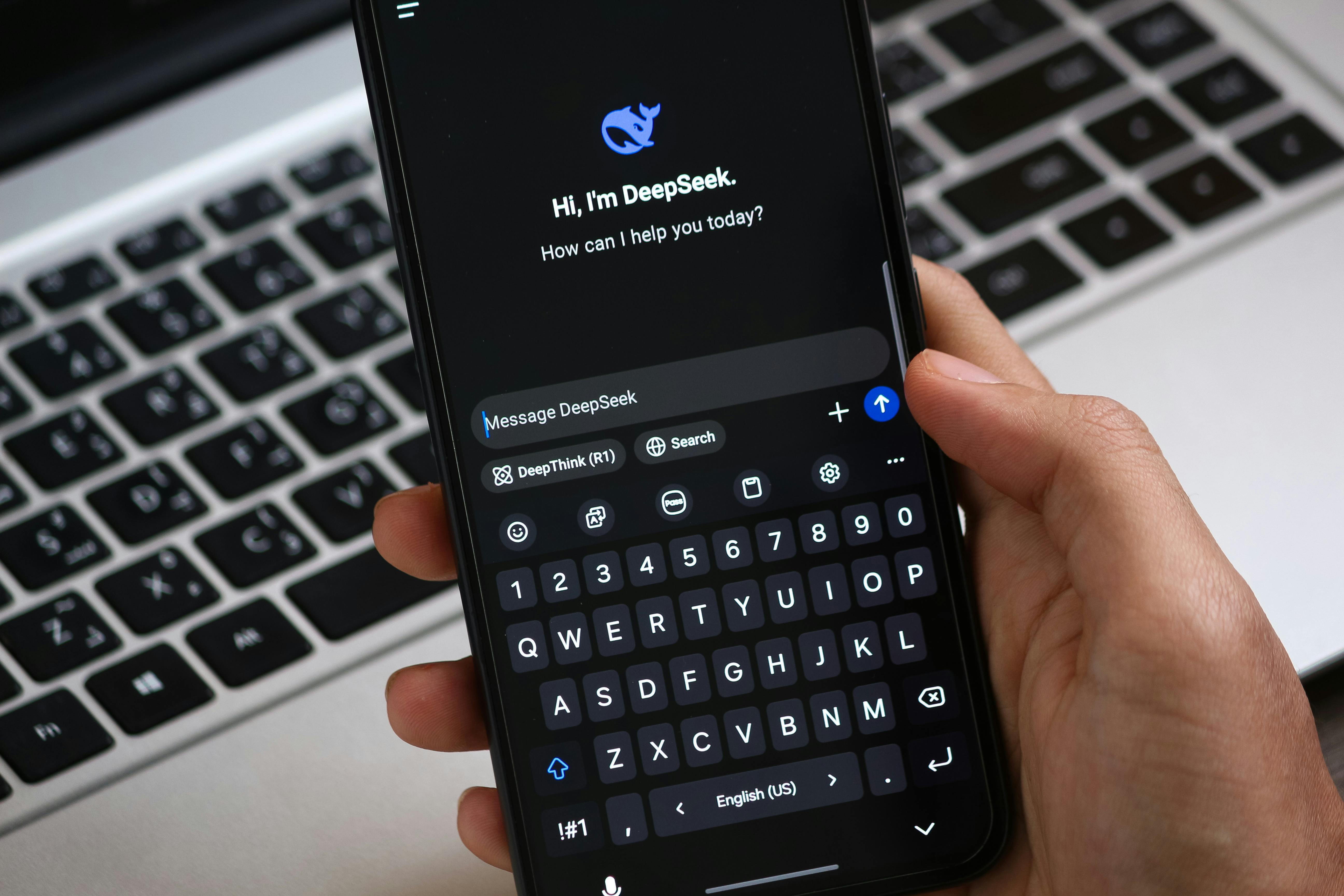
An AI agent (or intelligent agent in AI) is a program that perceives its environment, makes decisions, and takes actions to achieve specific goals—without constant human input.
If you’ve ever asked Siri for the weather or watched Netflix’s eerily accurate recommendations, you’ve interacted with an AI agent. These digital helpers are everywhere. But how do they actually work? Let’s pull back the curtain. Imagine having a 24/7 employee who never sleeps, learns from experience, and handles repetitive tasks flawlessly from answering customer queries to optimizing your website for search engines. That’s the power of an AI Agent. In 2024, businesses using AI agents report 40% faster task completion and 30% cost savings (McKinsey). But what exactly are they, and how can they transform your workflow? Let’s break it down—in plain English.
What Is an AI Agent? The Secret Weapon Automating Your Business Growth -

Karthi
May, 2025
•
8 min read
Think of it like a self-driving car:
Perceives surroundings (sensors, data inputs
Decides when to brake or turn (algorithms).
Acts autonomously (steering, accelerating).
In business, AI agents automate everything from customer service (chatbots) to SEO optimization (like CloseBi’s HyperFly™).
How AI Agents Work: The 4 Key Components
1. Sensors (Input)
Collects data (e.g., user queries, market trends, website analytics).
Example: HyperFly™, our hyperlocal marketing platform, scans Google search trends to find high-traffic keywords for your business.
2. Processor (Decision-Making)
Analyzes data using rules, machine learning, or LLMs (like GPT-4).
Example: An AI agent decides which email subject line boosts open rates.
3. Actuators (Output)
Takes action (e.g., sends responses, updates your website).
Example: HyperFly™ auto-publishes SEO-optimized blog posts for you.
4. Learning Mechanism
Improves over time (learning agent in AI).
Example: The more data HyperFly™ processes, the better it predicts ranking opportunities.
By 2025, 50% of enterprises will use AI agents for customer interactions (Gartner). Early adopters gain a massive competitive edge—like businesses using HyperFly™ to:
The Future: AI Agents Are Getting Smarter
Deploy Your AI Agent with CloseBi: Makes It Easy
No tech skills needed—set up in 5 minutes.
Built for business growth (SEO, content, listings).
Learns and adapts—so you stay ahead of algorithms
Stop wasting time on manual tasks. Let HyperFly™’s AI Agent do the work
Real-World Example:
CloseBi’s HyperFly™ AI Agent automates local SEO, content creation, and listing updates—so a 10-location restaurant chain can rank #1 in every city without hiring an SEO team.

What is Psychographic Segmentation?
8 min read
Jesica koli

May 4, 2025
What is composable architecture
8 min read
Jesica koli
May 4, 2025
Latest Blogs
Want More Footfall at Your Retail Store?
Lorem ipsum dolor sit amet, consectetur adipiscing elit, sed do eiusmod tempor incididunt.

what are the components of a website
8 min read
Jesica koli
May 4, 2025
popular Blogs
what is an ai agent
8 min read
Jesica koli
May 4, 2025
+(91) 0000 0000
closebi@ai.co
Subscribe to get an update :
Subscribe
CloseBi is a product of Hyperready Technology LLP. © 2025 Hyperready Technology LLP. All rights reserved.
CloseBi.AI — Smarter, Search-Led Growth with AI Agents CloseBi helps businesses accelerate organic growth and increase visibility through a search-led strategy powered by intelligent AI agents. From optimizing local search to driving real-time engagement and reputation management, our platform transforms everyday interactions into measurable business outcomes.
How to Use Customer Reviews in Local SEO?
karthi
May, 2025
•
5 min read
Customer reviews play a direct role in improving local SEO performance because search engines like Google consider them a key trust signal. The quantity, quality, and recency of your customer reviews influence how your business ranks in local search results, especially in Google’s Local Pack.
Why are customer reviews important for local SEO?
Customer reviews are important for local SEO because they help Google evaluate your business’s trustworthiness, relevance, and popularity. Positive reviews boost your local ranking potential, improve click-through rates, and influence purchasing decisions.
Google’s local ranking algorithm depends on three main factors: relevance, distance, and prominence. Reviews directly impact prominence—the measure of how well-known and credible your business appears online.
For example, a restaurant with 300+ positive reviews on Google and Yelp will typically appear higher in search than one with only a few.
How do customer reviews improve local search visibility?
Customer reviews improve local search visibility by increasing your business’s authority and engagement metrics across multiple platforms. Search engines recognize consistent positive feedback as a strong indicator of customer satisfaction and community trust.
There are three major ways customer reviews enhance visibility:
Boosting Map Pack Rankings – Frequent and genuine reviews help your Google Business Profile appear in the top 3 results on Google Maps.
Increasing Click-Through Rates (CTR) – Listings with higher star ratings attract more clicks, which signals engagement to Google.
Enhancing Keyword Relevance – Reviews often include natural language keywords (like “best pizza near me” or “affordable plumber in Boston”) that strengthen semantic relevance for local searches.
What are the best ways to collect customer reviews for local SEO?
The best ways to collect customer reviews for local SEO are by using automated prompts, providing simple review links, and following up after service completion.
Follow these five effective methods:
Send post-purchase review requests through email or SMS within 24–48 hours of delivery or service completion.
Add a direct Google review link on your website, email signatures, and social media profiles.
Use QR codes on receipts or packaging to make leaving a review effortless.
Encourage reviews in person by training your team to ask satisfied customers for quick feedback.
Incentivize ethically by thanking reviewers publicly instead of offering monetary rewards.
How should businesses respond to customer reviews?
Businesses should respond to customer reviews by acknowledging feedback, addressing concerns, and maintaining professionalism. Responding actively improves both user perception and local SEO performance.
Google confirms that engaging with reviews shows that your business values its customers, which helps build trust and can indirectly improve rankings.
There are three best practices for responding:
Reply promptly and politely to both positive and negative reviews.
Use location-specific and keyword-rich phrases in your responses (e.g., “Thank you for visiting our Miami bakery”).
Resolve issues offline when dealing with complaints to protect your brand reputation.
How can customer reviews influence conversions?
Customer reviews influence conversions by serving as authentic social proof. People trust peer experiences more than advertisements. A high rating and detailed testimonials encourage potential customers to take action—like calling, visiting, or purchasing.
According to BrightLocal’s 2025 Consumer Review Survey:
88% of consumers trust online reviews as much as personal recommendations.
Businesses with an average rating of 4.2 or higher convert 35% better than those below that threshold.
When reviews contain keywords like “fast delivery,” “excellent service,” or “best near me,” they also improve long-tail keyword rankings—contributing to better conversion rates through search.
How to showcase customer reviews effectively on your website?
Showcase customer reviews effectively on your website by embedding Google or Yelp widgets, creating dedicated testimonial pages, and featuring snippets on high-traffic pages.
Use these four placement strategies:
Homepage highlights – Display your top three Google reviews with star ratings for instant credibility.
Product or service pages – Embed relevant reviews to improve user trust and dwell time.
Schema markup integration – Use review schema (JSON-LD) to show rich-snippet stars in search results.
Dedicated testimonials page – Create a review hub that links back to your Google Business Profile.
How can negative reviews impact local SEO?
Negative reviews impact local SEO by lowering your average rating and potentially reducing click-through rates. However, they also add authenticity when handled correctly.
Google values transparency and real user engagement. A business with a mix of 4- and 5-star reviews often appears more trustworthy than one with only perfect scores.
The key is to:
Address negative reviews quickly.
Offer constructive solutions.
Maintain a calm and empathetic tone.
This approach signals to both customers and Google that your business is responsive and reliable.
How to track the impact of reviews on local SEO performance?
Track the impact of reviews on local SEO performance by monitoring key metrics in Google Business Profile (GBP) Insights and third-party tools.
Measure these five critical metrics:
Average star rating (target: 4.2–4.8 range)
Review count growth rate
Local keyword ranking movement
Click-to-call and direction requests
Customer sentiment trends
Tools like BrightLocal, Whitespark, and Google Analytics 4 (GA4) can help visualize how reviews affect conversions, impressions, and engagement over time.
Final Thoughts
Using customer reviews for local SEO is one of the most authentic and cost-effective strategies for small businesses. Reviews build credibility, increase visibility, and drive conversions. By actively collecting, responding to, and showcasing customer feedback, you strengthen your online reputation and improve your position in Google’s local search results.
What is Psychographic Segmentation?
8 min read
Jesica koli
May 4, 2025
What is composable architecture
8 min read
Jesica koli
May 4, 2025
Latest Blogs
Want More Footfall at Your Retail Store?
Lorem ipsum dolor sit amet, consectetur adipiscing elit, sed do eiusmod tempor incididunt.
what is an ai agent
8 min read
Jesica koli
May 4, 2025
what are the components of a website
8 min read
Jesica koli
May 4, 2025
popular Blogs
CloseBi.AI — Smarter, Search-Led Growth with AI Agents
CloseBi helps businesses accelerate organic growth and increase visibility through a search-led strategy powered by intelligent AI agents.
From optimizing local search to driving real-time engagement and reputation management, our platform transforms everyday interactions into measurable business outcomes.
CloseBi is a product of Hyperready Technology LLP.
© 2025 Hyperready Technology LLP. All rights reserved.
📍 Built for visibility. Powered by AI. Driven by results.
+(91) 90031 19844
info@hyperready.tech
Subscribe to get an update :
Company
Policies
CloseBi.AI — Smarter, Search-Led Growth with AI Agents
CloseBi helps businesses accelerate organic growth and increase visibility through a search-led strategy powered by intelligent AI agents.
From optimizing local search to driving real-time engagement and reputation management, our platform transforms everyday interactions into measurable business outcomes.
CloseBi is a product of Hyperready Technology LLP.
© 2025 Hyperready Technology LLP. All rights reserved.
📍 Built for visibility. Powered by AI. Driven by results.
+(91) 90031 19844
info@hyperready.tech
Subscribe to get an update :
Company
Policies
Maximize Local Impact, Drive Local Performance.